


NATHAN HARRIS 
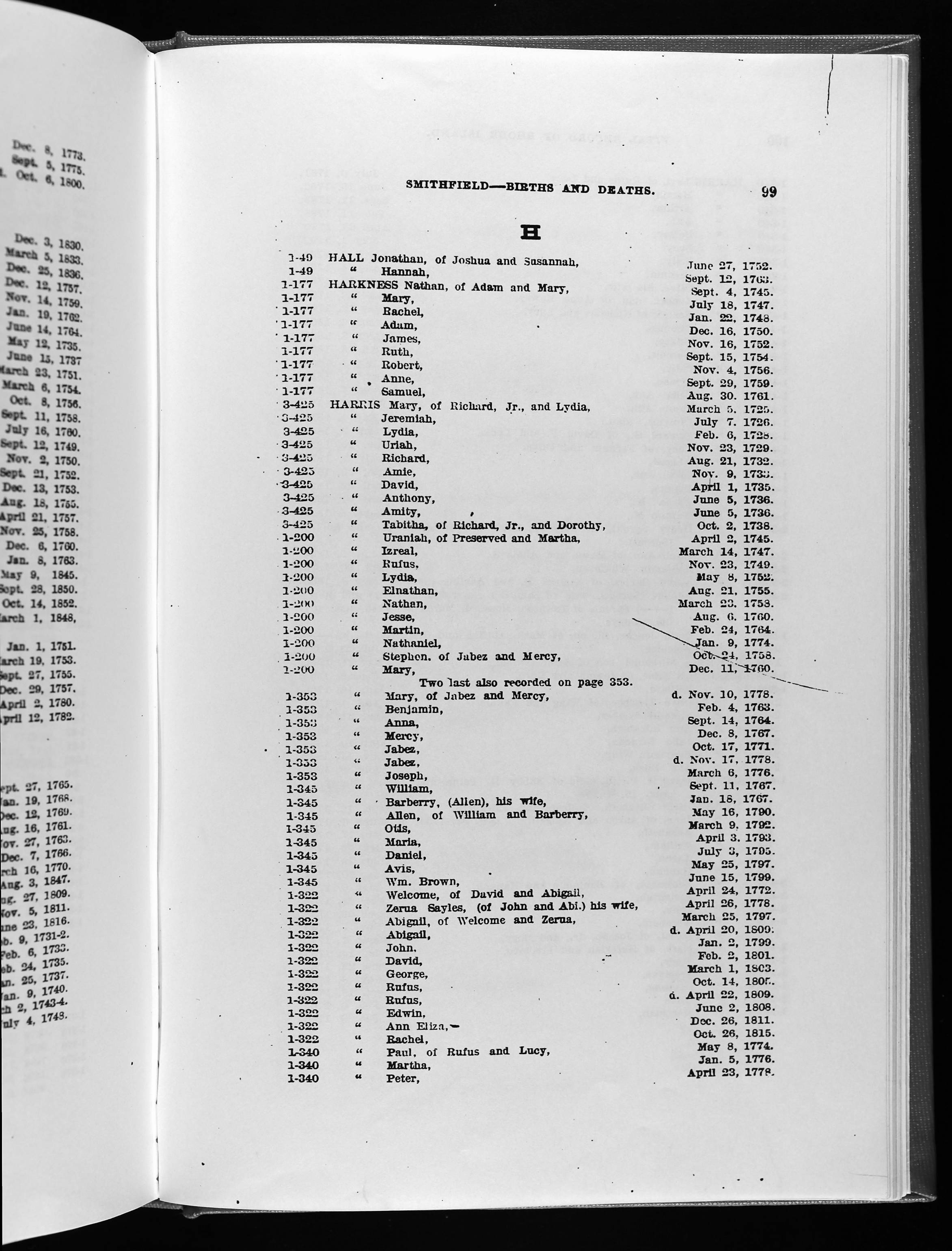
Nathan Harris, son of Preserved Harris and Martha Mowry was born March 23, 1758 in Smithfield, Rhode Island. 25 He died on 17 Nov 1835 in Mentor, Lake, Ohio. 4
He married Rhoda Lapham before March, 1780 and they lived in northern Rhode Island 3, 11.
She was born April 27, 1759 in Glocester, Rhode Island, died October 11, 1849, daughter of Solomon Lapham and Silvia Whipple of Glocester, R.I. 14
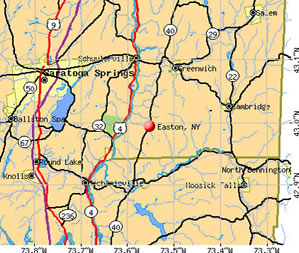
In late 1780 or early 1781 they moved to Easton, NY. Census records show Nathan and his family living in Easton, NY in 1790 (near Cambridge, NY). 1 Records show Nathan Harris was taxed in Saratoga East, Albany Co., NY in 1787 and 1788 24
They had the following children:
Emer 29 May 1781 Cambridge (Easton), Albany, New York 2 5
Martin 18 may 1783 Easton, Albany, New York
Preserved 8 May 1785 Easton, Albany, New York
Solomon 18 Mar 1787 Easton, Albany, New York
Seville about 1790 Easton, Albany, New York 1
Sophia about 1792 Easton, Albany, New York
Lydia about 1795 Palmyra, Wayne, New York
Naomi 5 May 1800 Palmyra, Wayne, New York
With its toleration of different religions, colonial Rhode Island became a haven for refugees of religious persecution, most notably the Quakers (Friends). 9 While the Quaker population in Rhode Island was small, they had great influence in political and social affairs. 8. Research shows some Harrises were Quakers living and worshiping in the Smithfield community of Providence, RI in late 1700s.10 However Nathan was not a Quaker but his wife was a member according to minutes of the Smithfield Meeting's records, RI. On 25 May 1780 "Rhoda Harris (Wife of Nathan" was "disowned" after a "complaint" was raised "for her neglecting to attend any religious meeting, also for her marrying out of unity and being into the fashions of the world". 11, 12 Research of Quaker records indicate that Nathan and his immediate Harris family were not Quakers, but were closely associated with Quaker friends. 26 Rhoda and many of her Lapham Quaker relatives have records at members meetings in Uxbridge or Smithfield at the time she married Nathan. 13
For several years starting in 1773 families from Rhode Island migrated to Easton, NY where an active group of Quakers was newly located. 6 Easton was the center of Quaker worship in the Hoosac Valley east of the Hudson and Saratoga (10 miles west of Cambridge, NY). Nathan and Rhoda moved to Easton in company with other Lapham relatives 22 and several other families from Smithfield, RI and Uxbridge, MA. 17 Their migration following the American Revolution was part of this expansion of families into northern, central and western New York State, 200 miles west of the Hudson.
Nathan's father Preserved died in 1797 and makes no mention of his son Nathan. All other sons and daughters received their inheritance. Since Nathan had left RI for New York by 1781 one can speculate his father gave him an early inheritance. 23 His mother had died in 1774 when he was 16. Nathan did have the means to purchase a large amount of land by 1794.
Later on, a large group of families (many from nearby Adams, MA and more from Easton) established the Farmington Preparative Meeting (Quaker) 8 miles from Tolland, NY (Palmyra). 26 Nathan and Rhoda Harris, along with twelve other families originally from Rhode Island, 7 went on to join the John Swift’s Colony at Tolland, New York (then known as Swift's Landing) 18 arriving by the way of the military road November 1791 (19). John Swift had moved his family there after the purchase of "Township No. Twelve in the Second Range of Towns in Phelps and Gorham Purchase." (now Palmyra) in September, 1790 (16) and immigration of others began soon after. On January 4, 1796, the area name was changed to Palmyra.
There were few white settlers in the Palmyra New York area when the Harris family arrived and Indian trouble persisted until 1794 18. On the 3rd of February, 1794, Nathan bought six hundred acres of land from John Swift for two shillings an acre (about $300 in New York currency). Nathan hued a home of timber near Wintergreen Hill and only a trail led to his log cabin. A few years later a road was laid out from the north side of Mud Creek to his log house. (The road from Main Street north to the north side of Mud Creek and called Chapel Street to this point was laid previously.) His house stood on the north end of Wintergreen hill, and lately was the residence of John S. Wright. Current address is 1963 Maple Ave, Palmyra, NY. 
More information on nearby historic site: Harris Farm
History shows that providence had a hand in bringing Nathan Harris to this important area of New York and in purchasing this section of land. It became some of the best farm lands in the area and its value increased significantly. It was here he reared his large family of eight children. Nathan later deeded portions of the farm to his son Martin, who later became a friend to the Joseph Smith family. In 1829 Martin mortgaged part of his farm to finance the first publication of the Book of Mormon after its translation. Later 151 acres of the land was sold for $3,000.00 to pay the debt to E.B. Grandin Press. Nathan's father in law left Rhoda 200 dollars in his will probated in 1800. (14)
Nathan was well known throughout the neighboring country for his prowess with rod and gun. Commonly known as “Uncle Nathan”, this good man frequently attended “raisings” and could play ball even in his old age, with all the enthusiasm of youth. One account in 1792 tells of a single haul of a seine (a large net with sinkers on ore edge and floats on the other) across Ganargua Creek, resulted in a catch of eighteen fine salmon.” (Palmyra History, Cole p.202) A “History of Wayne County Hew York” records “Harris as a marvelous fisherman" and when he was at home, his neighbors did not go fishing.
He possessed, to a remarkable degree, a spirit of rest and did not allow the onerous duties of the farm to weigh heavy on his mind. His zeal for letting things run, as the saying goes, was so great that he let the sills of his barn rot; away with the accumulation of barnyard material. If the necessities of the farm demanded the attention of Nathan, he would exhibit symptoms of a decline, but if a “Huskin’ Frolic” or a “Loggin’ Bee” was underway, his youthful exuberance was unbounded. He was the center figure of such groups and received with the best of humor any jokes aimed his way. With Nathan’s involvement elsewhere, Rhoda and the boys were left to manage the daily duties on the farm. (20) An account of a 1796 Husking frolic at the house of Nathan Harris is found in History of the Pioneer Settlement of Phelps & Gorham's Purchase (1852) as given by Mrs. Eden Foster: "We had pot pie baked in a five pail kettle, composed of 13 fowls, as many squirrels, and due proportions of beef, mutton and venison; baked meats, beans and huge pumpkin pies. Hunting stories, singing, dancing on a split basswood floor, snap and catch 'em, jumping the broom stick, and hunt the squirrel, followed the feast".
Beyond the house on the west side of the road was a spring in which he kept a pet trout. In time it grew to be a very large trout and so well educated that it would jump from the water and seize grasshoppers which were held out as bait. One day a friend, possessor of a large, red nose, called at the Harris home for a visit. A social glass was followed by a stroll over the farm, and ultimately the walk led to the spring. The friend got down on all-fours for a drink while Nathan looked on. As the red nose neared the water, out sprang the trout and seized it. A quick upward toss of the man’s head landed the trout a full ten feet to the rear. Nathan returned the trout to the spring an informed the bewildered friend that the time was propitious for fishing and together they made a fine catch that afternoon. The name “Trout Harris” was given to Nathan in consequence of this incident became widely known.
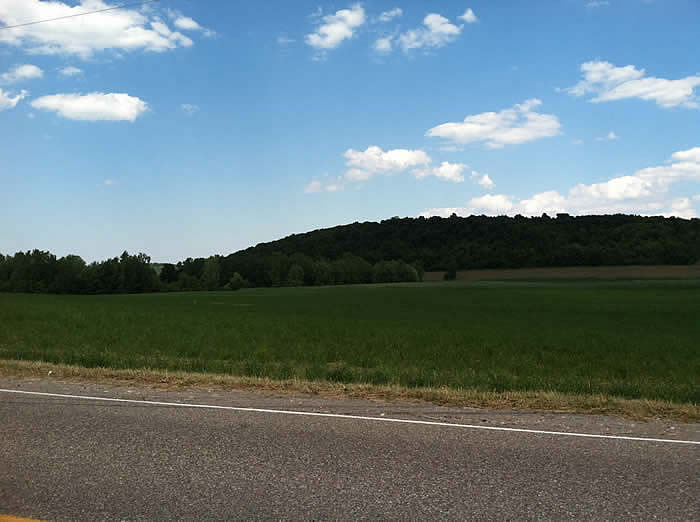
View of Nathan Harris Farm Land
with Wintergreen Hill in background.
At the first recorded town meeting of Palmyra in April, 1796 one of the decisions was to pay a bounty of two cents for crows, squirrels, woodpeckers, and blackbirds, and five dollars for every wolf. (21) When one considers that land could be purchased for fifty cents an acre wolf hunting may not have been strictly for sport. Wolves were frequent prowlers and the townspeople declared war on them and reduced their number to one big timber wolf. The animal had become known far and wide by its depredations. A hunting party was formed to rid the community of this marauder. As “Uncle Nathan” was now well along in years, he was allowed to follow the road while the rest of the men spread out in the timber on either side. As Nathan rode along the road on his old horse, the wolf came out just a few rods ahead of him. Nathan urged his horse to gallop towards the animal, raised his gun and fired under full headway and the creature was killed.
His long rifle brought down many a duck and his bullets, known to be his from their great weight, were chopped out of trees by area settlers even after his death. It was said that some of the more crooked roads in the surrounding neighborhoods, were first laid out as his hunting paths.
Another item of business at the first town meeting was the appointing of Nathan Harris to “path master”, (Histories of his son, Martin, record that for many years he was chosen to have charge of the roads in the Palmyra area.)
Nathan Harris lived where he first settled until the fish and game became scarce. He began to exhibit symptoms of uneasiness and sought an new area where wildlife continued to roam free. Eventually and moved to Ohio in 1831along with some of his married children and their families, migrating with other followers of the newly formed Church of Jesus Christ of Latter-day Saints. Nathan lived to be quite an old man and died in November 1835 at Mentor Lake, Ohio. There is no record that indicates that he ever joined the Church.
In the Prophet Joseph Smith’s diary 18 Nov 1835 in Kirtland, he recorded, "I then went to Preserved Harris's, to preach his fathers funeral Sermon, by the request of the family I preached on the subject of the resurection, the congregation were verry attentive My wife my mother and my scribe went with me to the funeral, we rode in a waggon, had a pleasant ride, the weather was pleasant, when we went, but cloudy and cool when we returned" 15 Preserved Harrises home still exists and is located on southwest corner of Rt. 84 and Chillicothe in Mentor.
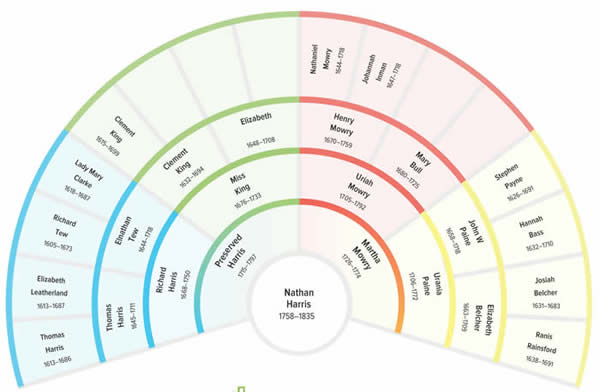
Nathan Harris Family Tree
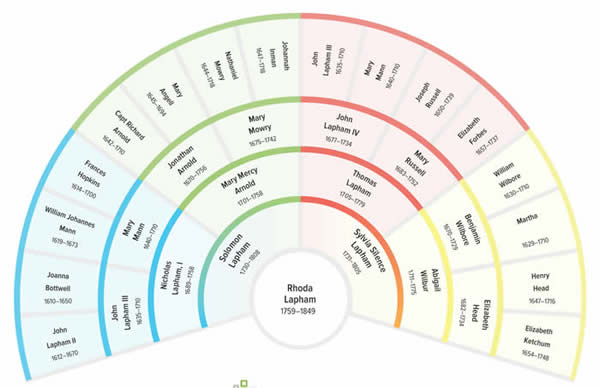
Rhoda LaphamFamily Tree
Information about Nathan's brother Rufus Harris Family who moved from Smithfield, RI beginning 1800 after his death.
(1) 1790 US Federal Census, Series: M637 Roll: 6 Page: 346, Ancestry.com, http://www.ancestry.com/. Easton, Albany Co., New York: shows Nathan plus 4 males under 16: (4 young sons ) and 2 females: (Rhoda and new baby son Seville, likely stated in error as a female)
(2) Donald Q. Cannon, Lyndon W. Cook, compiler, Far West Record (Salt Lake City: Deseret Book, 1983), p. 266, LDS Family History Library, 35 N West Temple Street, Salt Lake City, UT 84150 USA, 35 N West Temple Street, Salt Lake City, UT 84150 USA, FHL US/CAN 289.3 F22. Cambridge, NY is listed as birthplace which is very near Easton, NY. He was Christened in June.
(3) The American Genealogist, Vol. 24, p. 186.
(4) Job Harris Family Bible in possession of L R Harris states, "Nathan Harris died November 17th, 1835 in the 78 year of his age".
(5) In 1791, the Town of Cambridge was transferred from Albany County to Washington County.
(6) Quaker settlement beginning 1773.The original Smithfield Friends Meeting House, built in 1719, was part of a chain of Quaker Meeting Houses that were built along Great Road.
(7) Click here for: Research into the original purchasers of Farmington and their relationship to Nathan Harrises wife Rhoda Lapham.
(8) Records of the Society of Friends (Quakers), New York Yearly Meeting by Suzanne McVetty, C.G, The NYG&G Newsletter, Fall 1997
(9) In 1672, George Fox, the founder of the sect called Friends, or Quakers, arrived in Rhode Island,
(10) http://www.woonsocket.org/nationalregister.htm
(11) Swathmore College Friends Historical Library, Smithfield Monthly Meeting of Women Minutes, 1718-1818 Box NE-132 Pg. 87, "At a Monthly Meeting of Women held in Smithfield, the 30th of the 3rd month, 1780. The Representatives appearing from the several Preparative Meetings…Uxbridge Preparative Meeting informs that Rhoda Harris (Wife of Nathan) has been laboured with for her neglecting to attend any religious meeting, also for her marrying out of unity and being into the fashions of the word, which labour has been ineffectual." [Two women] "were assigned to further labour with Rhoda."
(12) Swathmore College Friends Historical Library, Smithfield Men’s Minutes, 1718-1801 Box NE-130 Pg. 248, The Smithfield Men’s minutes of 25 May 1780 read: "The Women’s Meeting inform that they have put Sarah Salsbury (formerly Howland) and Rhoda Harris (formerly Lapham) from under the care of Friends as members."
(13) Swathmore College Friends Historical Library, Smithfield Monthly Meeting Marriages 1725-1905 Box NE-129 Pg. 114, Levi Arnold m. Lydia Harris 4 Oct 1780 (Lydia Harris was the daughter of David Harris, Jr. and Abigail). Rhoda Harris is listed among the witnessess and even though disowned was not shunned but still lived among Friends, without being a member. Anyone could attend a Friends' marriage and, too, attend Meetings for Worship. Only Members in good standing could attend the Mondthly Meeting of Business and be included in the Vital recoreds. Once Rhoda was "disowned", the Clerk stopped mentioning her in any subsequent records. It is believed she moved with Nathan soon after this wedding as her first child, Emer was born in Easton the following May.
(14) Will of Solomon Lapham of Glocester, Providence, Rhode Island, Glocester RI Will book GLO-3 page 44, probated 5th day of July 1800. Transcribed version at: http://boards.ancestry.co.uk/surnames.lapham/199/mb.ashx?pnt=1
(15) [http://en.wikisource.org/wiki/Diary_of_Joseph_Smith,_Jr._(1835-1836)
(16) Ontario County New York Deeds, book 6, 45.
(17) Index to Meeting Records: Easton & Saratoga Monthy Meetings on-line, (includes index all of the monthly meeting minutes and vital records for New York that are on deposit at Swarthmore todate). James E. Hazard The Records of New York Yearly Meeting of the Religious Society of FriendsIndex, ( Mr. James E. Hazard, working with the original records at Friends Historical Library of Swarthmore College, completed a name index to New York Yearly Meeting in 2005.)
http://www.swarthmore.edu/library/friends/hazard/index.html
Were many of the Harrises living in Rhode Island in the 1700s Quakers? See Research Summary
18) History of Palmrya, Wayne County, New York written by the Palmyra, NY Western Presbyterian Church, Woman's Society.
In the winter of 1788-9 John Swift and Colonel John Jenkins purchased Tract 12, Range 2, and commenced the survey of it into farm lots by March 1790. Trouble with the Indians and Jenkins and his asociates made an end to the earliest attempt to attract and keep settlers. John Swift then bought out Jenkins and went to New England to encourage migration to his tract and then in the summer of 1789 returned to build a log house with a store house at the junction of present day Main and Canal Streets. Rhode Island Settlers were: Gideon and Edward Durfee (Tiverton, RI), Isaac Springer, William, James and Thomas Rogers, Festus and Isaac Goldsmith, Humphrey Sherman, Zebulon Williams, Weaver Osborne, David Wilcox and Nathan Harris.
19) A Brief History of Paomyra by Bob Lowe Indian troubles were a constant worry of the early settlers until the Pickering Treaty was signed in Canandaigua in 1794. Prior to the execution of the treaty with the Indians, the good people of Palmyra had begun the construction of a block house on Wintergreen Hill.
(20) See newspaper article from Palmyra Courier, 1872
(21) http://www.ebooksread.com/authors-eng/george-washington-cowles/landmarks-of-wayne-county-new-york-lwo/page-18-landmarks-of-wayne-county-new-york-lwo.shtml
(22) See explanation of relatives who moved to Easton from Smithfield or surroundings.
(23) Based on the values listed in his father's will for the other brothers, Nathan could have been given $1500+ from his father, and thus plenty of cash to pay $300 for the purchase of the land in Palmyra area. See; http://harrisfamilynews.com/direct_harris_preserved.htm
(24) The Settlers of the Beekman Patent VI (Dutchess Co., NY, Page 236
(25) RI Vital Records, Providence County, Smithfield Births and Deaths- V3: Pg.99
(25) Click here to read Research Summaries: Were the Harrises Quakers?
(26) Also see: Refiners Fire by John L. Brooke, American Council of Learned societies.
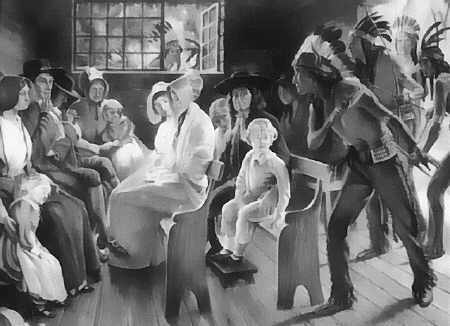
The story of “Fierce Feathers”: “During the Revolutionary War…The Quakers, although inconvenienced by the conflicts, were never forced to leave their land. An explanation of their ability to survive this war may be learned in the authenticated story of “Fierce Feathers”. A group of Burgoyne’s Indians approached their meeting house while the Quakers were in silent meditation and the Indian’s intent of killing was diverted by the calm of the Quakers. The Indians left them unharmed and hung a white feather over the door as a symbol of peace between the Indians and the Quakers”
Click Here: For link to the Farmington Quaker involvment in Womens Rights in America
The greatest Quaker expansion in New York occurred from 1740 to 1830. As coastal new England grew overpopulated, Quaker residents of Dartmouth, New Bedford, and Nantucket, Masachusetts; Rhode Island; and the Piscataqua Valley of New Hampshire moved, sometimes en masse, to New York or, beginning in 1761, the New hampshire Grants (Vermont), then claimed by New York. After the Revolution, eastern New York communities sent colonists into central and western new York while some Loyalist sympathizers moved to Ontario. (New England Ancestors Spring 2009 by Field Horne)